What Is the S-400 Air Defence System? A Deep Dive Into Russia's Missile Shield
In the realm of modern warfare, air superiority is not just about having the most fighter jets—it's also about defending your airspace from hostile threats. One of the most powerful tools in this domain is the S-400 Triumf Air Defence System, developed by Russia. Known for its incredible range, speed, and versatility, the S-400 is one of the most coveted air defence systems in the world today.
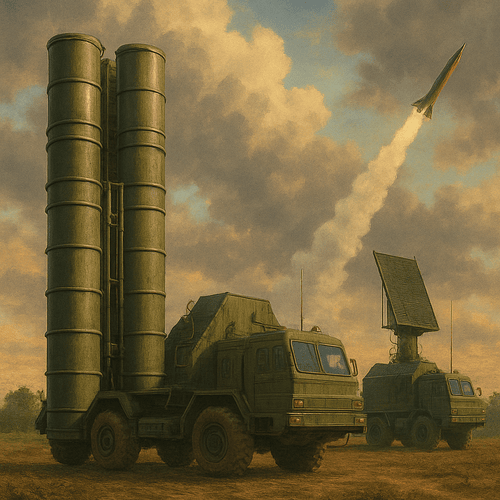
What Is the S-400?
The S-400 Triumf (NATO reporting name: SA-21 Growler) is a long-range surface-to-air missile (SAM) system developed by Russia’s Almaz Central Design Bureau. It is an upgrade to the older S-300 series and became operational with the Russian military in 2007. The system is designed to detect, track, and destroy aircraft, drones, cruise missiles, and even ballistic missiles within seconds.
Key Capabilities
- Range: Up to 400 km (250 miles) for certain missile variants
- Altitude: Can hit targets flying at altitudes up to 30 km
- Speed: Interceptor missiles can travel at over Mach 14
- Multi-targeting: Can track up to 300 targets and engage 36 simultaneously
- Missile types: Can launch multiple types of missiles (short to ultra-long range)
How Does It Work?
The S-400 works in layers. It consists of a radar system, command-and-control center, and multiple missile launchers. Once a threat is detected by its radar (up to 600 km away), the system calculates trajectory, chooses the best missile, and launches it within seconds. It uses a combination of radar guidance and heat-seeking to intercept targets.
What makes it extremely effective is its multi-layered defence. The S-400 can engage various targets with different missiles, allowing it to defend against simultaneous attacks of varying speeds and altitudes.
Why Is It So Popular Globally?
Several nations—including India, China, and Turkey—have acquired or expressed interest in the S-400. Here's why:
- Versatility: It can protect against a wide range of aerial threats.
- Cost-effective: Provides performance comparable to U.S. systems like THAAD and Patriot but at a more affordable price.
- Autonomy: Countries can operate the system independently without relying on external networks.
India’s S-400 Deal
India signed a $5.43 billion deal with Russia in 2018 to procure five S-400 regiments. Despite pressure and potential sanctions from the U.S. under CAATSA (Countering America's Adversaries Through Sanctions Act), India went ahead citing the importance of the system for national security, especially given rising tensions with both China and Pakistan.
The first system arrived in late 2021 and has been deployed strategically in border areas to safeguard critical assets and airspace.
Controversies and Challenges
The S-400 has become a geopolitical flashpoint. When Turkey purchased it, the U.S. responded by removing Turkey from the F-35 fighter jet program. The presence of a Russian system in NATO territory sparked fears of espionage and system incompatibility.
S-400 vs Other Systems
Compared to U.S. systems like Patriot or THAAD, the S-400 offers superior range and multi-missile capabilities. However, its integration with non-Russian systems remains a concern, and some experts believe Western systems offer better networked warfare support.
Conclusion
The S-400 is not just a missile system—it's a powerful symbol of strategic defence and global military alignment. For countries like India, it offers a significant upgrade in protecting their skies. As missile and drone threats continue to evolve, systems like the S-400 will play a central role in shaping the future of air defence and global diplomacy.
Stay tuned to NotepadPlusPlus.in for more defence tech explainers and military insights!